

One Decision.
Finally in One Place.
Degree. College. Funding. Debt. Career. Cost of living. Degree Worthy connects the pieces so you can see how your choices work together before you commit.

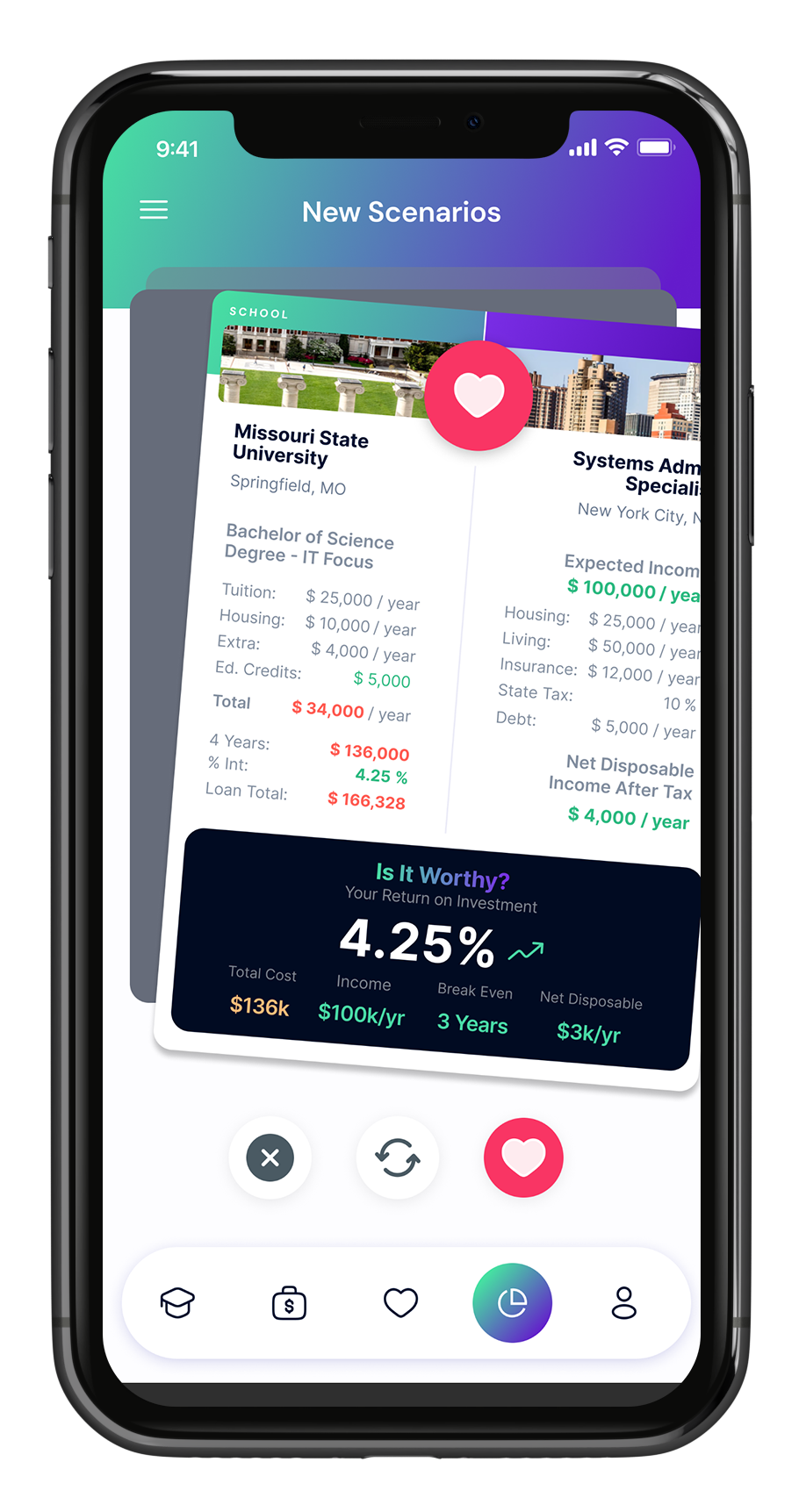
FEATURE 01Scenario Comparison
Stop comparing schools one tab at a time.
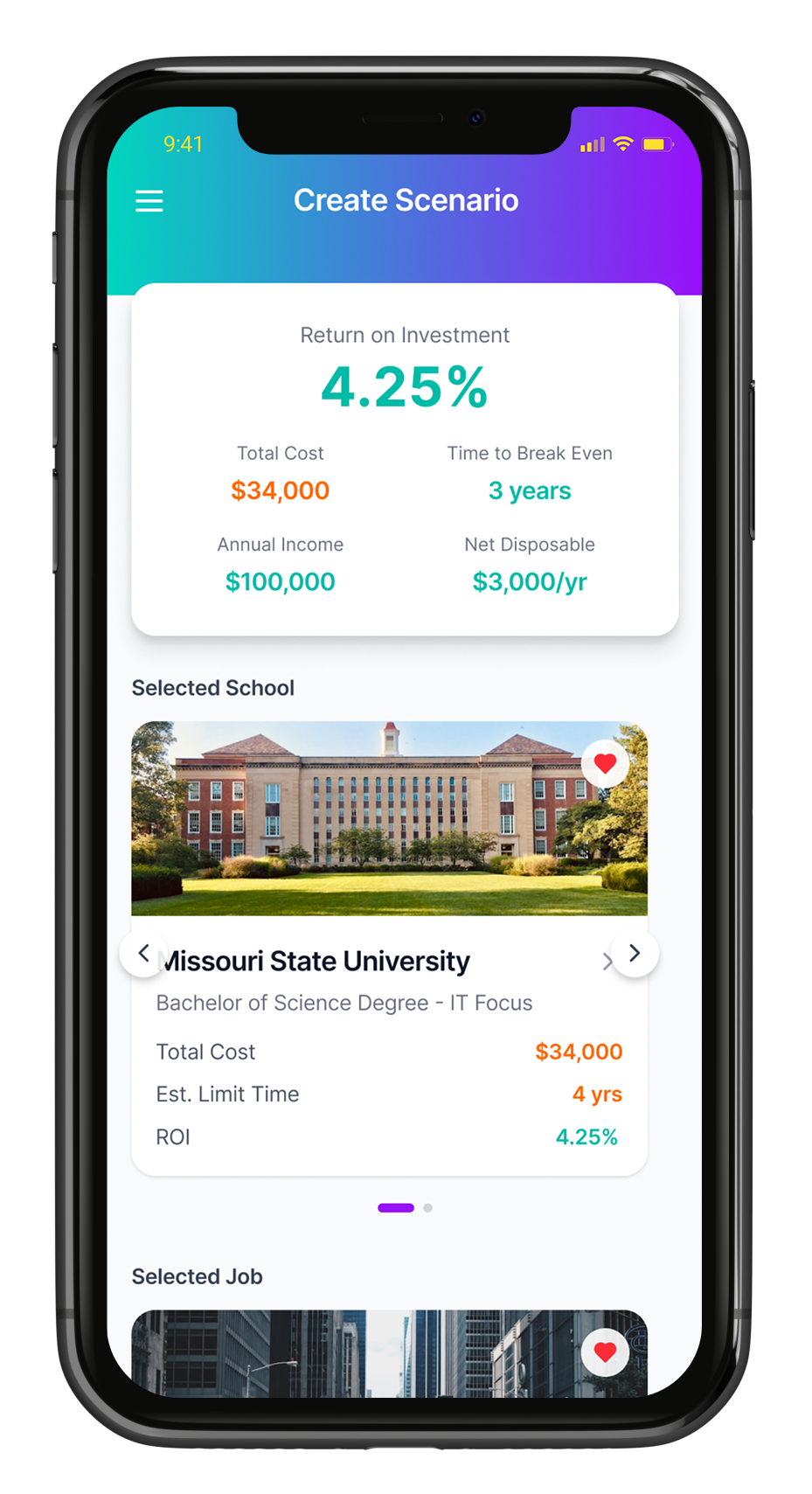
Degree Worthy builds up to 12 potential paths based on your objectives.
Each scenario combines the pieces that actually affect your decision:
School + Degree + Funding + Projected Financial Outcome
Compare them side by side using the same measurements so the tradeoffs are easier to see.
Why it matters:
A decision this interconnected shouldn't require ten browser tabs, three calculators, a spreadsheet, and a guess.
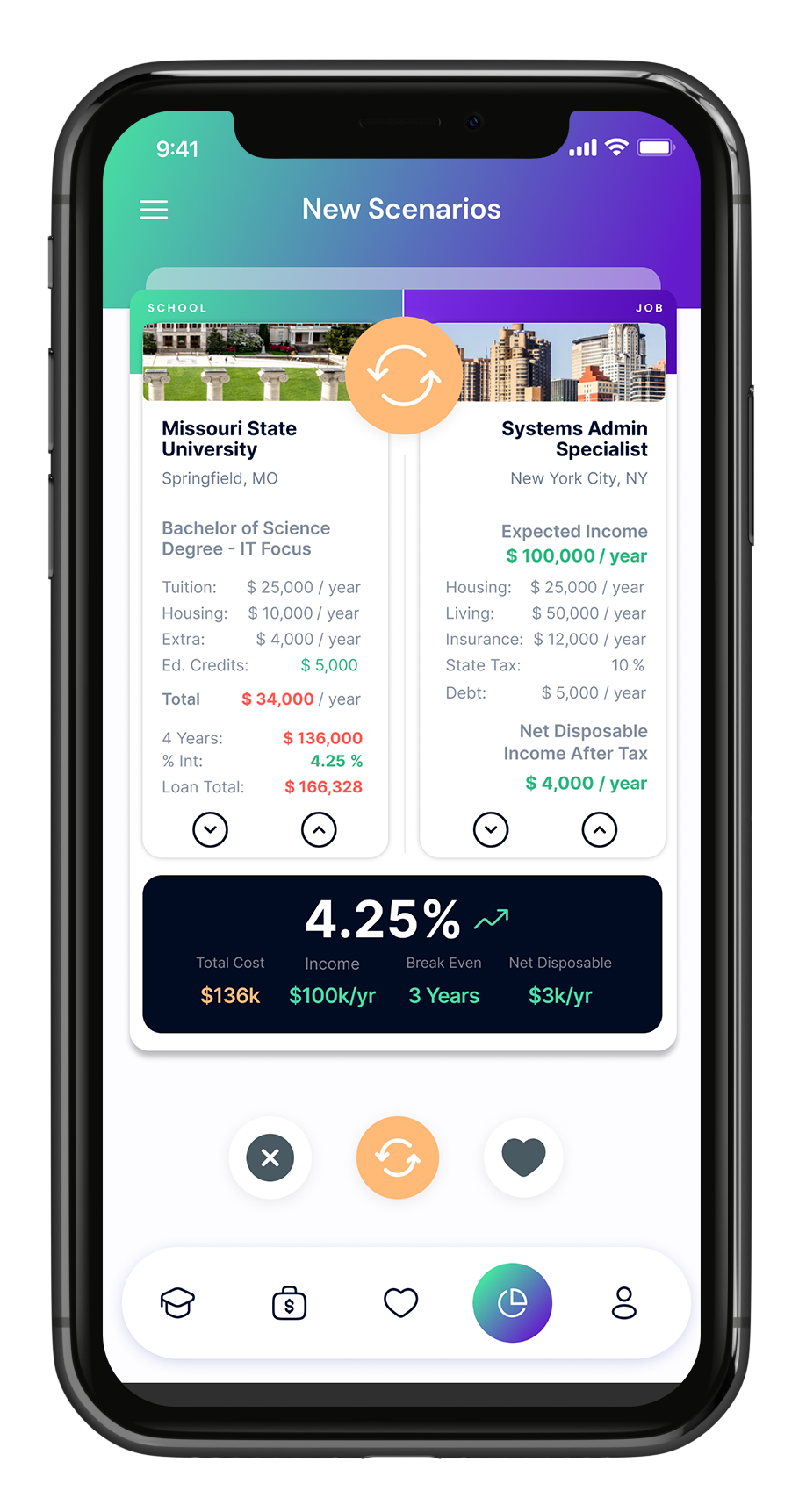
FEATURE 02True All-In Cost
The number on the brochure isn't the whole number.
Degree Worthy estimates the complete cost of your path across the full degree.
That can include tuition, fees, living expenses, grants, scholarships, family contributions, work income, projected borrowing, and interest.
It also helps reveal potential shadow debt—the additional borrowing and resources families may use when traditional financial aid doesn't cover the full cost.
Why it matters:
You deserve to understand the potential full cost before you're responsible for paying it.
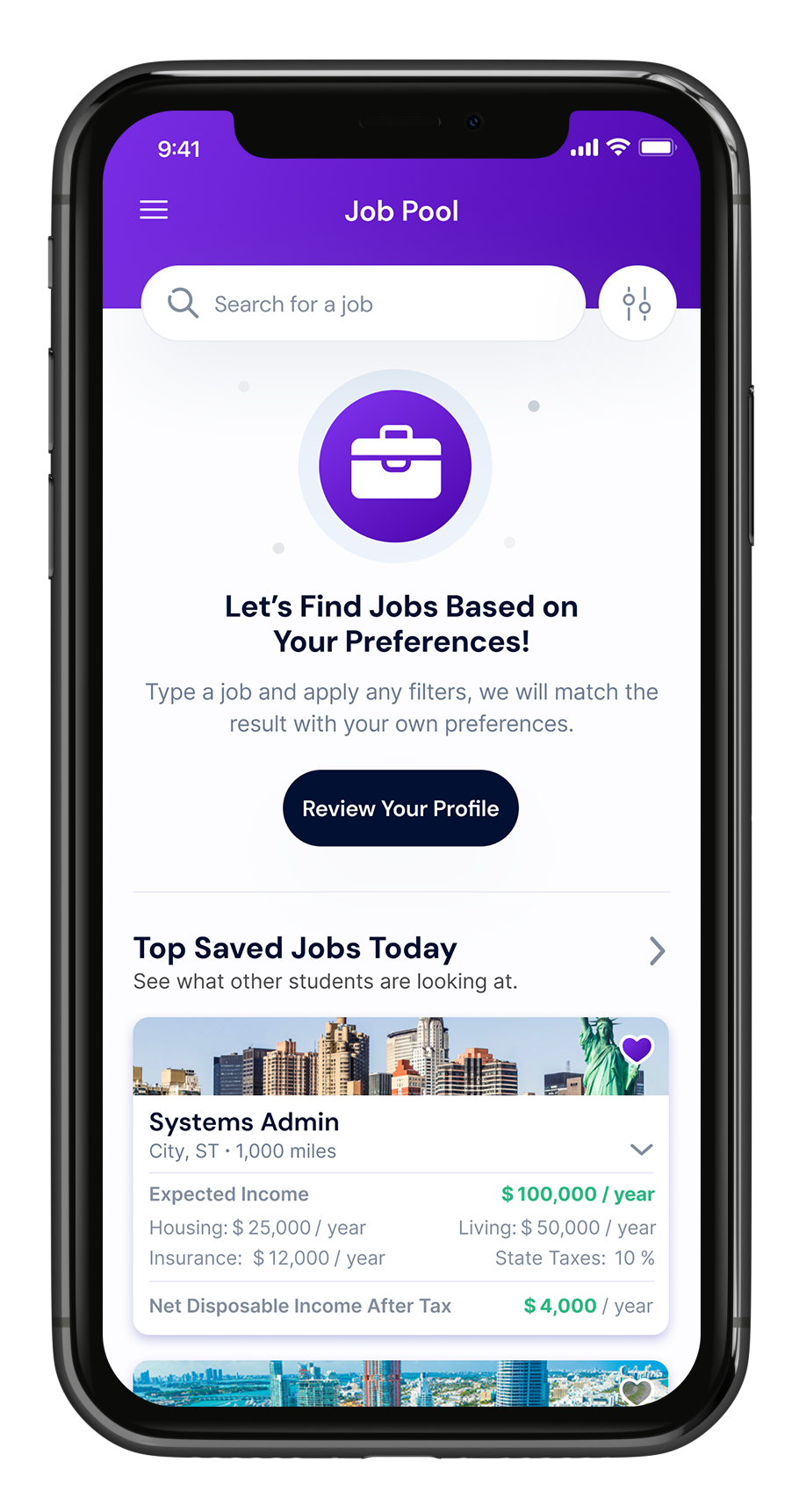
FEATURE 03Financial Coverage Ratio
Can your projected income realistically carry the plan?
Degree Worthy evaluates how your projected income compares with estimated loan payments and living costs.
The result gives you another way to evaluate whether a scenario may leave financial breathing room or stretch your budget.
Why it matters:
Affording tuition today is only part of the equation. The plan also has to make sense after graduation.
FEATURE 04Your Financial Life
Turn an abstract loan balance into a monthly reality.
See a projected picture of life after graduation based on your intended career and where you want to live.
Degree Worthy brings together:
Projected earnings
Cost of living
Student loan payments
Estimated monthly expenses
Potential money remaining
Because "$50,000 in student loans" is abstract.
Seeing how that debt could fit into a monthly budget makes it real.
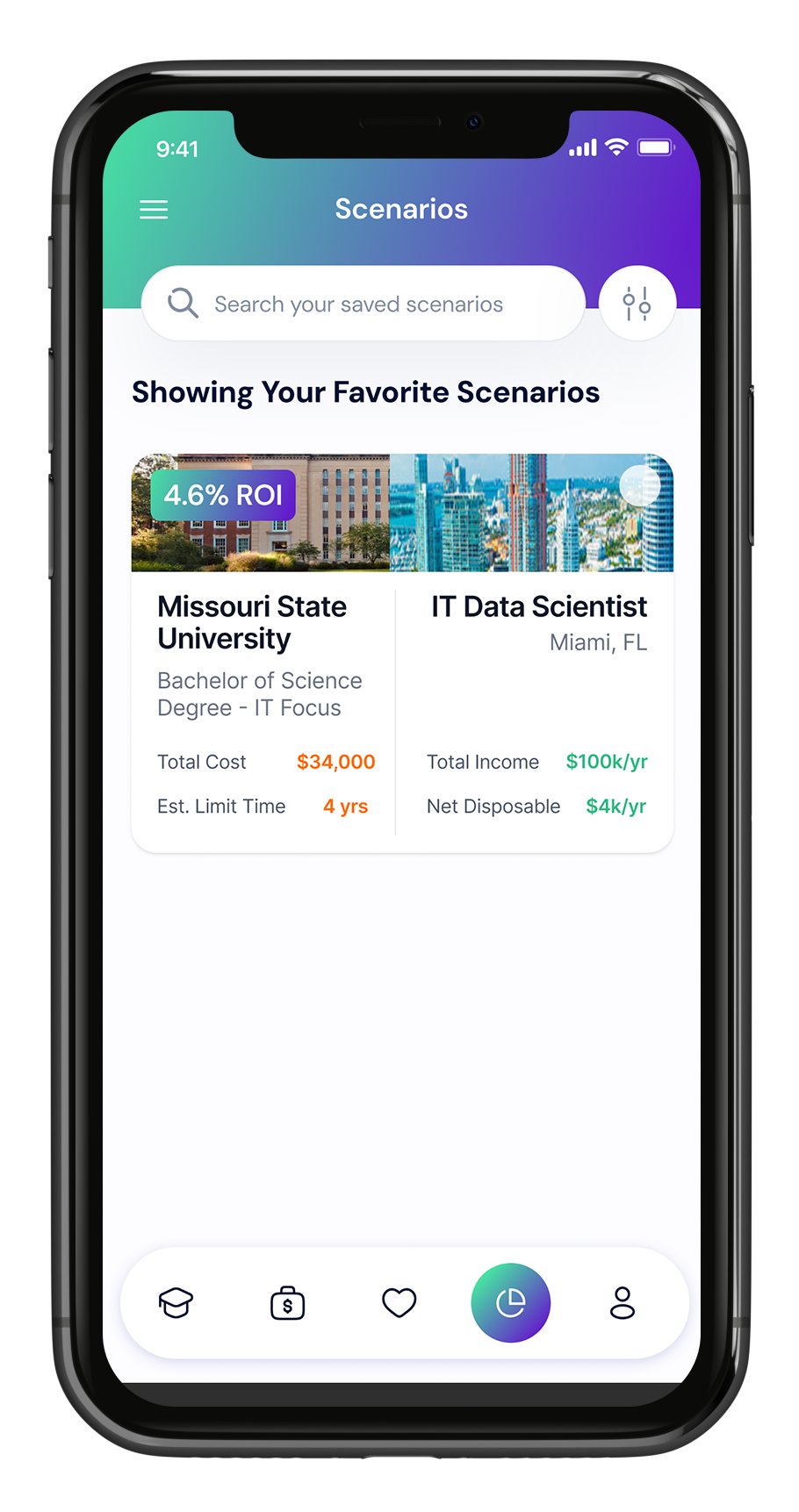
FEATURE 05Guided Critical-Thinking Questions
Don't like what the numbers show? Change the question.
Degree Worthy doesn't give you a discouraging number and leave you there.
It helps you explore other possibilities.
What if you:
Considered a public university?
Started at community college and transferred?
Lived at home?
Applied for additional scholarships?
Explored another program?
Changed where you planned to live after graduation?
Change an input. Run another scenario. See what moves.
The goal isn't to judge your first choice. It's to help you understand your choices.
Built on Data
You Can Trace
Degree Worthy combines the information you provide with data from credible public and third-party sources.
Depending on the analysis, sources may include:
U.S. Department of Education College Scorecard
IPEDS
Federal Student Aid
Bureau of Labor Statistics
College cost and outcome data
Wage and earnings data
Cost-of-living information
Current loan terms and repayment rules
Underlying datasets are refreshed as updated information becomes available.
Degree Worthy also makes an important distinction:
These are projections—not guarantees.
The platform is designed to help you evaluate possibilities and understand tradeoffs, not predict your future with certainty.


What You Can Do With Your Results
Compare.
See different paths using the same measurements.
Share.
Bring parents, partners, counselors, or advisors into the conversation.
Adjust.
Change assumptions and watch your scenarios update.
Reconsider.
If something doesn't work, explore what could change.
Save.
Keep the paths you're seriously considering.

See more than the cost of college.
See what your choices could mean.